


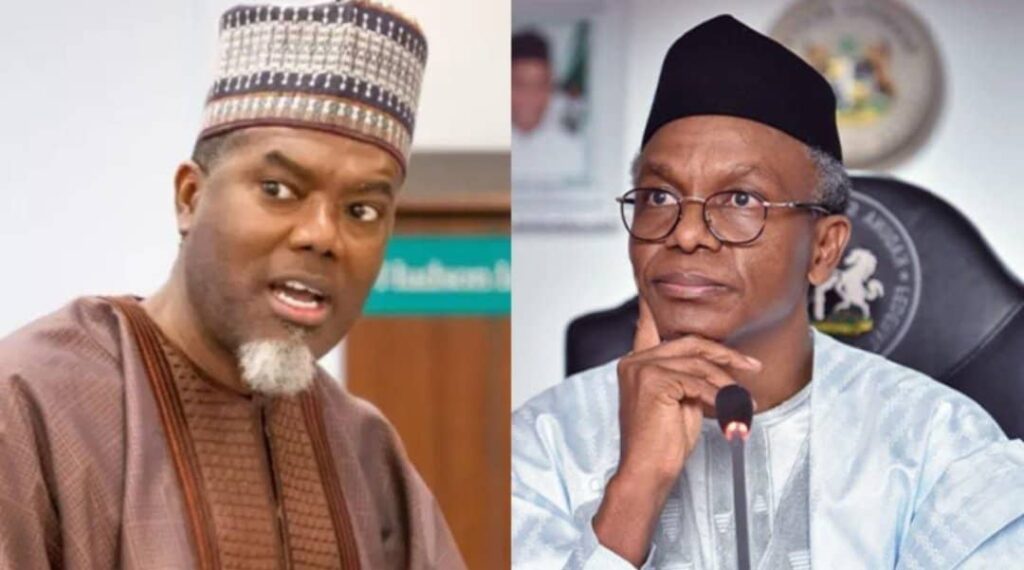
Will Reno Omokri Get The “El-Rufai Treatment”?
By Ik Ogbonna
I was torn between titling this article, Should Reno Omokri Get The El Rufai Treatment and Will Reno Omokri Get The El Rufai Treatment but chose the latter.
In the labyrinthine world of Nigerian politics, where alliances shift like desert sands and past enmities resurface with electoral precision, President Bola Tinubu’s recent ambassadorial nominations have reignited a familiar debate: Can yesterday’s critics become tomorrow’s diplomats? The spotlight falls on Bemigho Reno Omokri better known as Reno Omokri, the fiery social media provocateur and former aide to ex-President Goodluck Jonathan, whose name now graces the list of 32 nominees forwarded to the Senate for confirmation.
Just weeks ago, Nasir El-Rufai, the erstwhile Kaduna State governor and Tinubu ally, publicly lamented a similar betrayal—his 2023 ministerial nomination torpedoed during Senate screening.
As Omokri’s turn approaches, whispers in the corridors of the National Assembly suggest history might rhyme: Will the Senate, wielding its constitutional veto, extend the “El-Rufai treatment” to this prodigal son?
The parallel is uncanny, and not without irony. El-Rufai, a key architect of Tinubu’s 2023 victory, was nominated for the powerful Ministry of Power in July of that year, only to be side-lined when the Senate withheld confirmation citing adverse security reports from the State Security Service (DSS).
In a bombshell interview earlier this year, El-Rufai didn’t mince words: “Tinubu, never my friend, ordered Senate to reject my ministerial nomination.” He accused the president of cajoling him into accepting the role to “defeat the electricity mafia,” only to pull the plug via fabricated intelligence— a move that left the former governor humiliated and side-lined. Senate President Godswill Akpabio at the time defended the decision as procedural, but insiders pointed to deeper political machinations, including El-Rufai’s independent streak and potential as a rival influence within the All Progressives Congress (APC)
Fast-forward to November 2025, and Tinubu’s latest diplomatic shuffle includes Omokri as a non-career ambassador designate from Delta State. The list, comprising 15 career diplomats and 17 political heavyweights like former INEC Chairman Mahmood Yakubu and ex-Aviation Minister Femi Fani-Kayode, was submitted in two letters to Akpabio, urging “expeditious” confirmation. For Tinubu, it’s a calculated outreach—rewarding vocal supporters and co-opting former foes to bolster Nigeria’s foreign policy ahead of the 2027 elections. But Omokri’s inclusion has sparked a firestorm, echoing El-Rufai’s saga in both process and peril.
Omokri’s journey from Tinubu detractor to nominee is a masterclass in political reinvention. Pre-2023, the Delta-born author and podcaster was unrelenting: He branded Tinubu a “drug baron” on the Mic On podcast, questioned his Chicago State University credentials, and vowed never to serve under him. “I had to make a decision,” Omokri later explained, citing court exonerations and “incontrovertible evidence” of Tinubu’s academic record as his pivot point. By election’s end, he had flipped, becoming a staunch defender on X (formerly Twitter), where his 2.5 million followers amplify pro-Tinubu narratives. Post-nomination, Omokri hailed the president as “Christlike” in forgiveness, thanking him for embodying “patriotism.” Yet, this about-face has fueled accusations of opportunism. Charly Boy, the iconic musician, decried it as an “endorsement of filth,” citing Omokri’s alleged Igbo bigotry and personal scandals, including abandonment of family and unproven harassment claims. The Delta Democrats Forum echoed this, rejecting him as unfit to represent the state due to his “erratic political positions.”
The Senate’s reaction? A powder keg. Reports indicate a factional rift has even shuttered the lawmakers’ WhatsApp group, with Akpabio allegedly rallying allies to “screen Omokri out” over his past barbs. Senator Osita Ngwu has publicly urged rejection, arguing that someone who slandered the president as a “drug baron” without retraction cannot credibly represent Nigeria abroad. The Peoples Democratic Party (PDP) labeled the entire list “reprehensible,” demanding withdrawal and decrying it as a reward for “electoral malpractice and falsehoods.” Ijaw leaders are split: While the Ijaw National Congress questions the integrity of fraud-tainted nominees, others like Joseph Ambakaderimo defend Omokri’s “wide followership” and experience.
So, will Omokri suffer El-Rufai’s fate? The odds tilt toward turbulence, but not outright doom. Unlike El-Rufai’s case—marred by DSS red flags and Tinubu’s alleged sabotage—Omokri’s hurdles are more reputational than securitized. The Senate, under Akpabio’s pro-Tinubu leanings, may fast-track most nominees to signal party unity, especially with strategic postings to powerhouses like China, the UAE, and the UN on the horizon. Yet, the chamber’s history of selective scrutiny (e.g., withholding three ministers in 2023, including El-Rufai) provides ample leverage for payback. Public outrage, amplified on X, could pressure lawmakers—posts likening the screening to “popcorn-worthy drama” abound. If security reports surface (a low bar in Nigeria’s intelligence ecosystem), or if anti-Tinubu senators like those in the opposition caucus mobilize, Omokri could be the sacrificial lamb.
On balance, however, Tinubu’s “big heart”—as Omokri himself might tweet—may prevail. The presidency, via Senior Special Assistant Demola Oshodi, justifies such picks by “competence and capacity,” framing them as diplomatic assets for 2027. Delta APC’s congratulations signal grassroots buy-in.
El-Rufai’s rejection stemmed from intra-APC power plays; Omokri’s, by contrast, rewards a converted critic, potentially neutralizing a digital thorn. Still, in a Senate where grudges linger like unpaid debts, the “treatment” could manifest as a bruising hearing rather than outright dismissal—think pointed questions on “drug baron” tweets and loyalty oaths.
Ultimately, this saga underscores Nigeria’s patronage politics: Nominations aren’t just appointments; they’re litmus tests for forgiveness, vendettas, and viability. If Omokri emerges unscathed, it affirms Tinubu’s magnanimity as a unifier. If he falters, it exposes the fragility of political redemption. As screening begins this week, one thing is certain: The Senate chamber will be electric, and Nigerians, ever the avid audience, will tune in. In the end, whether Omokri hoists Nigeria’s flag or watches it wave without him, the real winner may be the enduring theater of it all.
Ik Ogbonna is a PR Practitioner and Journalist. ikogbonna@gmail.com