


Imo Economic Summit 2025: How Gov Uzodimma rewrote the South-east story in 48 hours
By Dr Ijeomah Arodiogbu
For the first time in a long while, the rest of Nigeria, Africa, and indeed the world, is not just listening. They are taking notes. They are booking flights. They are bringing capital. They are coming home. Welcome to the new Imo. Welcome to the new South-East. Welcome to the new Nigeria that begins in Owerri.
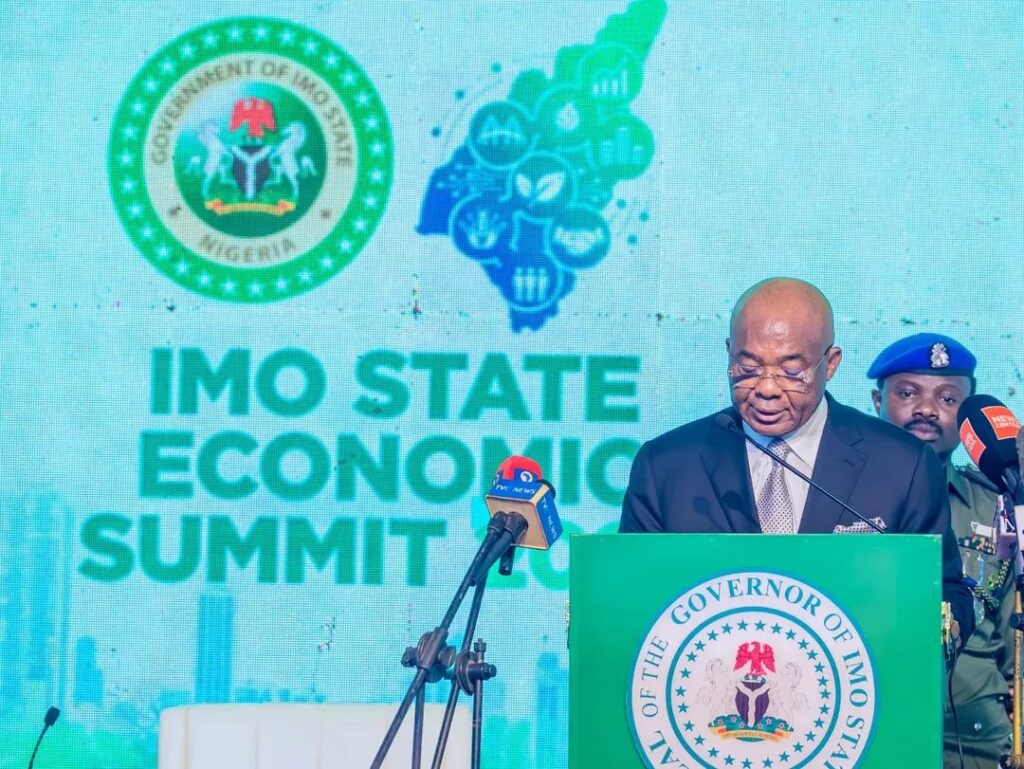
On the morning of 4 December 2025, something quietly revolutionary happened in Owerri that will be taught in leadership classes for generations to come. A Nigerian governor walked onto a world-class stage in the very heart of Igboland and, without uttering a single word of complaint about the past, proceeded to sell the future of his state the way Steve Jobs once unveiled the iPhone: with absolute conviction, infectious energy, and the quiet certainty that anyone who missed this moment would regret it for the rest of their lives. For the next forty-eight unforgettable hours, His Excellency, Senator Hope Uzodimma, turned the Concord Boulevard into the new centre of gravity for serious African investment. And the world did not just listen; it answered with a thunderous, enthusiastic yes.
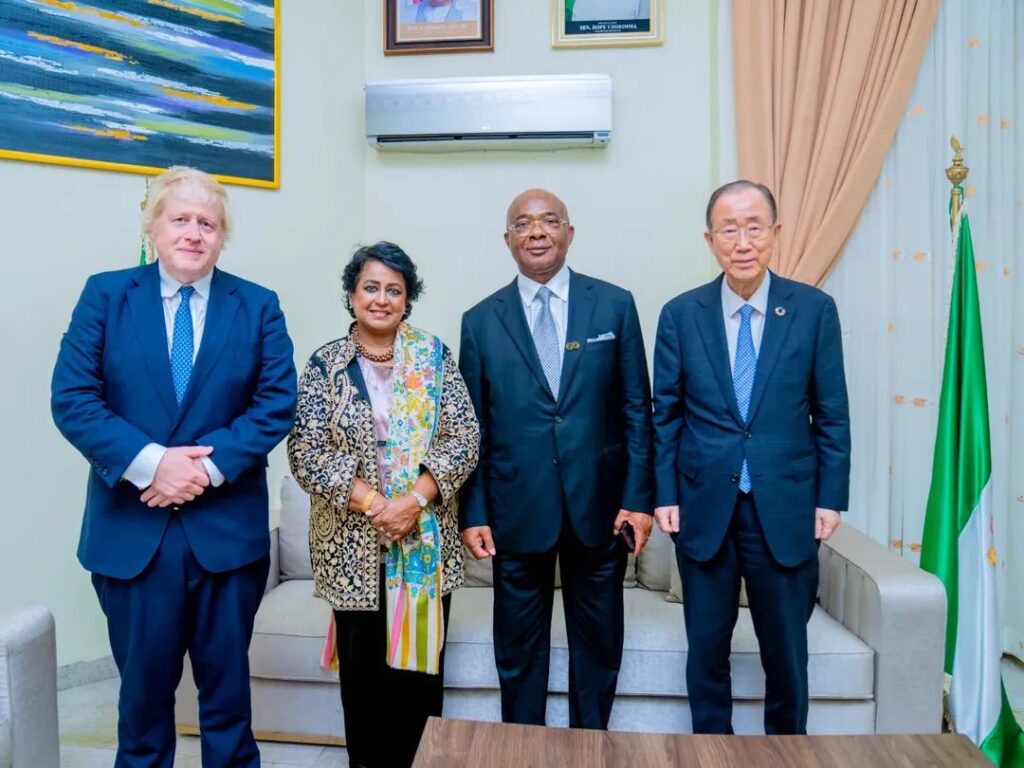
I have been privileged to attend virtually every major economic gathering in this country since the return to democracy in 1999 but none of them; not a single one; came close to the electric atmosphere, the laser focus, quality of global participation, and sheer sense of historic possibility that enveloped Owerri on those two December days. Investors who had never imagined setting foot east of the Niger arrived from every continent.
Seasoned diplomats who normally restrict themselves to Abuja and Lagos made the journey. Development bankers who usually fly over the South-East on their way to Kigali or Accra chose to land in Owerri. Industrialists from Europe, agro-tycoons from Asia, tech founders from California, hospitality giants from Dubai and Johannesburg, and, crucially, deep-pocketed Nigerian business leaders all came. They saw wide, smooth roads leading into the city. They experienced airtight, almost invisible security. They tasted Imo hospitality at its warmest and most generous. And above all, they met a governor who refused to leave the venue until the very last investor had been personally attended to.
What left everyone speechless was the total absence of the familiar lamentation soundtrack. Instead, every plenary, every breakout session, every corridor conversation revolved around one thing and one thing only: what Imo State possesses in abundance right now, and how the world can partner to turn those God-given assets into sustainable wealth for generations yet unborn. The agriculture track alone has permanently changed the conversation about food security in the South-East. Serious global and domestic players in rice, cassava, oil palm, and high-value horticulture left the summit with concrete, bankable pathways to establish large-scale processing clusters across multiple local government areas.
The model the governor presented is elegantly simple yet profoundly transformative: the state government clears, surveys, and secures vast expanses of land; the investors bring world-class mechanisation, storage facilities, and guaranteed markets; and thousands upon thousands of Imo youths, women cooperatives, and willing farmers become proud out-growers earning dignified incomes from their own soil instead of migrating to cities in search of jobs that do not exist.
In the solid minerals sessions, something close to a miracle occurred. International mining companies that had kept the East at arm’s length for decades because of policy summersaults, illegal artisanal activity, and community mistrust suddenly saw a transparent, environmentally responsible, and community-inclusive framework they could trust. They left the summit convinced, many for the first time, that Imo is ready to responsibly transform its rich deposits of limestone, lead-zinc, kaolin, lignite, and laterite into sustainable industrial wealth and tens of thousands of skilled, dignified jobs.
Tourism and the creative economy, for so long dismissed with a wave of the hand in Imo political circles, were elevated to the very centre of the state’s economic vision. Master plans were unveiled for a world-class lake-front integrated resort at Oguta that will rival anything in the Maldives or Mauritius; for eco-lodges and adventure parks nestled in the rolling hills of Okigwe, Obowo, and Isu; for a film and entertainment village that will make Nollywood proud; and for an annual Imo International Cultural Carnival that will put Owerri on the global tourism calendar the same way Rio has Carnival and Edinburgh has Fringe. Global hospitality chains, streaming giants, and entertainment investors who attended left with one clear conclusion: Imo is the next big tourism frontier in Africa.
The digital economy and youth empowerment track produced pure electricity in the hall. The symbolic and literal ground-breaking ceremony for the Imo Digital Village, a sprawling, ultramodern technology park with direct partnerships from the biggest names in global tech, sent a message louder than any youth empowerment summit ever could: very soon, Imo sons and daughters will be coding world-class software in Orlu, animating Hollywood-grade films in Mbaitoli, building the next Paystack or Flutterwave in Njaba, and earning dollars in their own villages while eating ofe nsala cooked by their mothers.
At the regional level, the summit quietly achieved what twenty years of many conferences have struggled to deliver. The old petty rivalries and suspicions are finally giving way to the mature understanding that when Imo rises, Abia rises; when Abia rises, Anambra rises; when Anambra rises, Enugu rises; When Enugu rises, Ebonyi rises; and when the entire Igbo land rises together, Nigeria becomes unstoppable. For the country as a whole, the Imo example is nothing less than a masterclass in the competitive federalism that the All Progressives Congress promised Nigerians in 2015, 2019 and 2023.
While some state governments still define progress by the size of their monthly federal allocation and the volume of their complaints in Abuja, Imo State has demonstrated in the clearest terms possible that a focused, courageous administration can bypass bureaucracy, go directly to the global market, attract serious private capital at scale, create wealth internally, generate employment on an industrial scale, and actually reduce the pressure on the federal treasury. That, ladies and gentlemen, is the true meaning of restructuring: not endless constitutional debates, but concrete, visible results on ground in the Eastern Heartland.
Let me be very clear about one thing: none of this happened by accident. Governor Hope Uzodimma did not hand this summit over to commissioners, consultants, or special advisers. From the opening cocktail on Wednesday night to the final investment roundtable on Friday evening, he was physically present at every session. He chaired panels himself. He interrogated presentations. He challenged investors to dream bigger. He gave on-the-spot approvals and directives. When an investor raised a concern, he turned to the relevant commissioner and solved the problem there and then. That is leadership at its most raw, most inspiring, and most effective.
I watched him move from table to table during coffee breaks, from one investor delegation to another during lunch, from one breakout room to the next during parallel sessions. Sleeves rolled up, tie occasionally loosened, voice hoarse by the second day, but eyes burning with passion. This was not a governor performing for cameras. This was a leader who understands that the destiny of five million Imo people, and by extension twenty-five million Ndị Igbo, rests on his ability to close deals that will outlive him. And close them he did.
The real test, as the governor himself repeatedly emphasised, is not the glamour of the two days in Owerri but the factories that will rise in Ohaji-Egbema next year, the digital hubs that will open in Orlu the year after, the tourists who will begin to arrive in Oguta in 2027, and the pride that will return to the faces of Imo youths when they can say, “I work in Imo, I earn in dollars, and I sleep in my father’s compound.
“That test now falls on all of us. On the state bureaucracy to clear files without delay. On traditional rulers to mobilise their communities for peaceful co-existence with investors. On the youth to embrace skills acquisition with both hands. On the private sector to honour every commitment made in that hall. On opposition parties to put aside partisanship and support what is clearly in the interest of Ndị Igbo. But make no mistake: the narrative has already changed forever. The South-East is no longer the region that begs for inclusion. We are now the region that invites the world to come and build with us. We are now defined by what we are building in 2025 and beyond.
Imo State, under the courageous, visionary, and relentlessly focused leadership of Senator Hope Uzodimma, has built its own table, laid it with the finest china, prepared the richest palm wine and ofe nsala, and thrown the doors wide open with a simple invitation: come and feast with us, and together we will feed nations. The Eastern Heartland is beating again: strongly, proudly, confidently, and profitably.
And for the first time in a long while, the rest of Nigeria, Africa, and indeed the world, is not just listening. They are taking notes. They are booking flights. They are bringing capital. They are coming home. Welcome to the new Imo. Welcome to the new South-East. Welcome to the new Nigeria that begins in Owerri. The revolution has started. And it is being televised, invested in, and celebrated, in real time.
Dr Ijeomah Arodiogbu is the National Vice-Chairman (South-East) of the All Progressives Congress (APC)
Dr Ijeomah Arodiogbu is the National Vice-Chairman (South-East) of the All Progressives Congress (APC)