


The Boldest Prison Break in History Led to Shutdown of Correctional Centre
In June 1962, three prisoners carried out what is still considered one of the boldest escape attempts in American history, and they did it without weapons, violence, or outside help. They escaped using patience, ingenuity, and three fake heads.
The setting was Alcatraz, the island prison designed to be inescapable. Surrounded by frigid water and powerful currents, Alcatraz was meant to break spirits, not test creativity. The prison’s reputation was simple and terrifying: once you arrived, you were never supposed to leave.
Among the inmates were Frank Morris, a highly intelligent man with a history of prison escapes, and brothers John Anglin and Clarence Anglin, raised in Florida and known for their strong swimming abilities. Together, they noticed something guards had overlooked. The concrete around the ventilation grilles in their cells was crumbling from decades of salt air.
Night after night, using spoons stolen from the dining hall, they slowly widened the vents behind their sinks. They hid the debris in their pockets and scattered it during music hour when Morris played the accordion to mask the noise. Progress was slow, but it was steady, and no guard noticed.
Above their cells was an unused service corridor. Once the openings were large enough, the men could slip through and climb upward. But escaping the cells was only half the problem. Guards checked prisoners every night. Empty beds would trigger alarms instantly.
That is where the heads came in.
Using soap, toothpaste, toilet paper, and concrete dust, the men carefully molded realistic human faces. They studied shadows, angles, and proportions, shaping noses, cheekbones, and brows by hand. Hair was collected from the prison barbershop floor and embedded into the soft material. The result was disturbingly convincing.
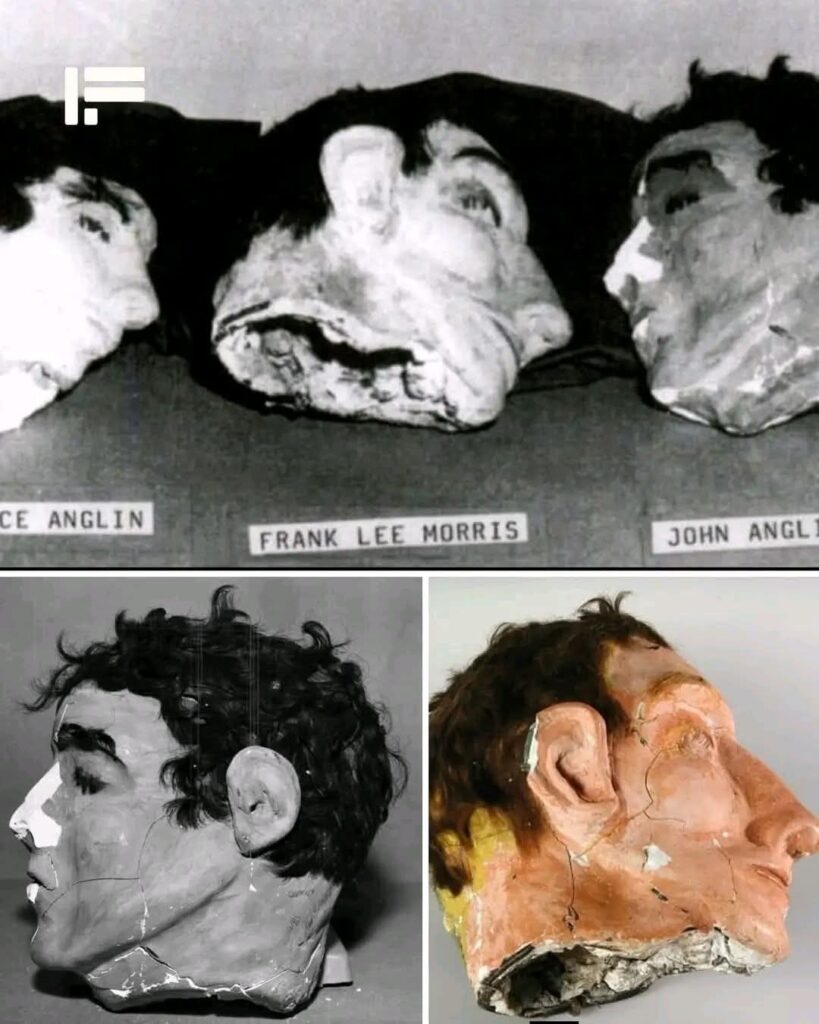
Each night, the fake heads were placed on pillows, blankets pulled up to the neck, faces turned just enough to pass a flashlight glance. Guards walked by. The prisoners appeared asleep. Nothing seemed wrong.
Meanwhile, above the cell block, the men prepared the rest of their escape. They stitched together a raft and life vests from more than fifty stolen raincoats, sealing the seams with steam pipes. A small concertina-style bellows was built to inflate it. Everything was hidden above the ceiling until the night came.
On June 11, 1962, after lights out, the men slipped through the vent holes for the final time. The dummy heads were left behind. They climbed up, inflated the raft, and made their way to the edge of the island.
By the time guards discovered the escape the next morning, it was already too late. The cells were empty. The heads stared back from the beds. The bay held no answers.
An enormous manhunt followed. Pieces of the raft were found. Some personal items surfaced in the water. But no bodies were ever recovered. Officially, the case remains unresolved.
The FBI eventually concluded the men likely drowned, citing water temperature and currents. Yet the Anglin family later claimed they received postcards and photographs suggesting the brothers survived and lived in South America. In 2013, a letter surfaced, allegedly written by Morris, claiming he survived the escape and lived for decades afterward. Its authenticity was never fully confirmed.
What remains certain is this: no other prisoners ever escaped Alcatraz successfully after that night. The prison closed the following year, its legend forever altered.
Alcatraz was built to defeat strength and fear. It was not built to defeat imagination.
Sometimes history turns on massive battles or powerful leaders. And sometimes it turns on small details, slow hands, and three faces that were never real at all.