


Abia 2027: Traditional Rulers as Political Partisans, A Dangerous Betrayal of Their Sacred Role
By Ik Ogbonna
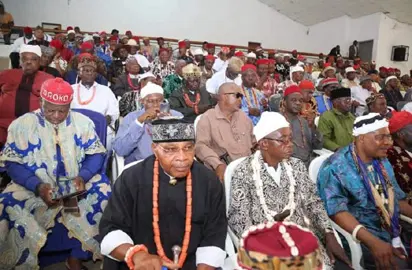
In Abia State, a disturbing precedent is being set that threatens the very foundation of traditional institutions in Nigeria. Members of the Abia State Council of Traditional Rulers have reportedly unanimously endorsed Governor Alex Otti for a second term in 2027, with their chairman, Eze Dr Linus Nto Mbah, openly declaring that “all traditional rulers are behind him” and pledging “100 percent support” to ensure his re-election.
This is not mere expression of gratitude; it is a clear descent into partisan politics by those who are, by custom, culture, and law, supposed to stand above it.
Traditional rulers in Nigeria are not ordinary citizens or politicians. They are custodians of culture, symbols of unity, and fathers to all within their domains—regardless of political affiliation, party loyalty, or personal ambition. The constitution and the statutes governing chieftaincy matters across states recognize this sacred neutrality. They are expected to mediate disputes, promote peace, and serve as non-partisan rallying points for their communities. When they openly align with one governor, one party, or one candidate, they forfeit that moral authority and turn themselves into tools of political warfare.
The endorsement by Abia’s traditional rulers is particularly condemnable for several reasons. First, it violates the spirit and letter of their role as impartial fathers to all. In a democracy, citizens—including politicians from opposition parties—have the right to compete freely without the heavy hand of traditional institutions tilting the scale. By declaring that Governor Otti must complete eight years “whether he did well or not” in the logic of precedent, and by vowing to “make sure” he is re-elected, these monarchs have positioned themselves as kingmakers rather than neutral elders. What message does this send to citizens who support other parties or candidates? That their voices are secondary to the collective will of the palace?
Second, this action sets a dangerous precedent for the politicization of traditional stools. Once traditional rulers become active partisans, they lose the respect and trust of segments of their people. A ruler who campaigns openly for one side cannot fairly adjudicate land disputes, community conflicts, or even family matters involving supporters of rival parties. The institution itself becomes tainted, reducing revered monarchs to mere appendages of government house. History is littered with examples across Nigeria where traditional rulers who dabbled too deeply into partisan politics ended up diminished, ridiculed, or even dethroned when the political wind changed.
Third, the claim that this endorsement is based purely on “performance” rings hollow when delivered as a blanket, unanimous political commitment. Good governance should be appreciated, but appreciation does not require surrendering the neutrality of the throne. Citizens and civil society groups can praise infrastructure projects, security improvements, or road constructions without dragging the entire traditional council into electoral endorsement. By doing so, the rulers have not only endorsed a governor—they have implicitly endorsed the ruling party and alienated potential opponents.
Nigerian law and tradition demand that traditional rulers abstain from active politics. They are barred from holding partisan political offices, and many state laws explicitly caution against open political partisanship to preserve the dignity and impartiality of the stool. The Abia traditional rulers’ action flouts this principle. It is unlawful in spirit, condemnable in practice, and corrosive to democratic fairness. A father does not publicly campaign for one child against the others; he guides, advises, and loves all equally. Traditional rulers are fathers to the entire state—APC supporters, PDP supporters, Labour Party loyalists, and the undecided alike.
This trend must be roundly condemned by all well-meaning Nigerians, civil society, opposition parties, and even the federal authorities responsible for chieftaincy affairs. Traditional institutions should be strengthened as unifying forces, not weakened by turning them into campaign platforms. Governors and politicians should also resist the temptation to co-opt monarchs for short-term electoral gains; true leadership earns respect through performance, not through forced endorsements from the palace.
Abia State traditional rulers owe their people better. They should immediately retract this partisan posture and reaffirm their commitment to neutrality. The throne is too sacred to be reduced to a political endorsement machine. In a maturing democracy, traditional rulers must remain above the fray—fathers to all, partisans to none. Anything less is a betrayal of their heritage and a disservice to the people they are meant to serve.
The people of Abia, and indeed all Nigerians, deserve traditional institutions that unite rather than divide, that mediate rather than campaign, and that command respect through impartiality rather than partisan loyalty.
Ik Ogbonna, PhD is a Journalist and PR Consultant based in Owerri.