


The US Embassy’s Abuja Visa Shutdown: A Damning Mirror to Nigeria’s Increasing Security Challenges
By Ik Ogbonna
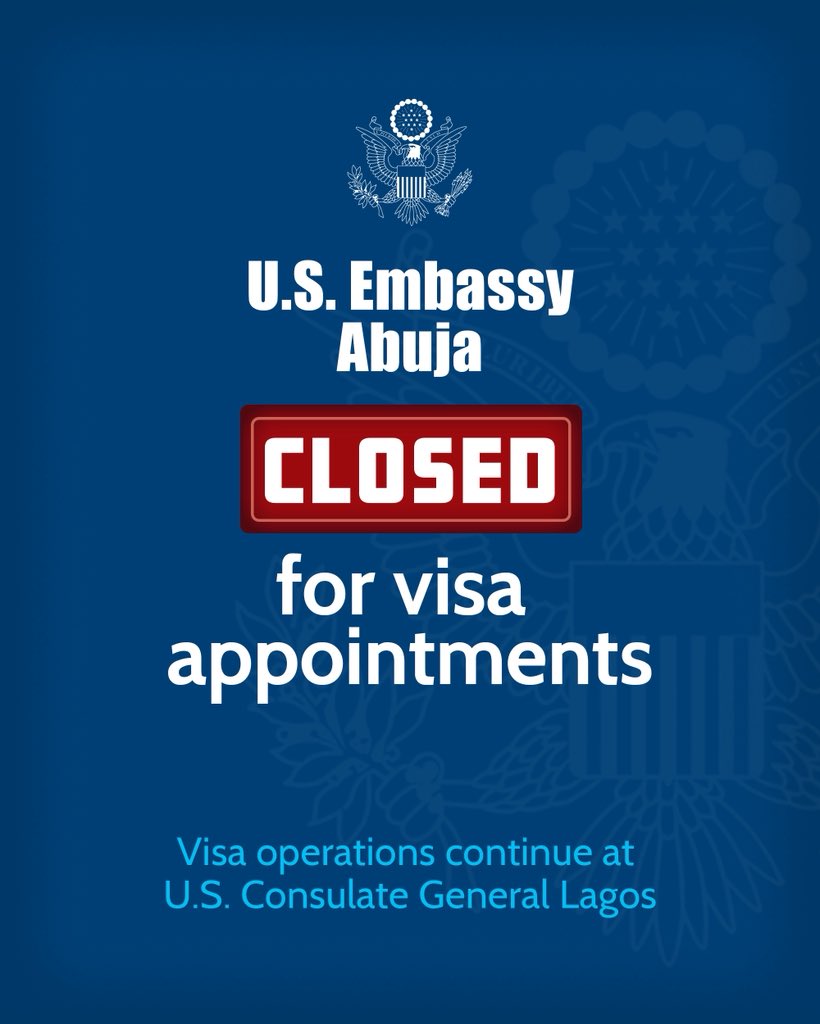
The announcement landed like a thunderclap on April 9, 2026: the US Embassy in Abuja is closed for visa appointments. Applicants were told to check their emails for rescheduled slots, with all nonimmigrant visa processing shifting southward to the Consulate General in Lagos. This wasn’t a full embassy shutdown—routine operations continue in a limited capacity for emergencies—but it followed hard on the heels of the US State Department’s April 8 order authorizing the voluntary departure of non-essential American staff and families from Abuja. The stated reason? A “deteriorating security situation.”
Lagos remains fully operational, a pragmatic lifeline that prevents total paralysis. Yet this selective pivot isn’t mere administrative housekeeping. It is a pointed indictment of the insecurity gripping northern and central Nigeria—and, by extension, the entire nation’s stability. As someone committed to unvarnished truth-seeking, I see this not as an overreaction by Washington, but as a sober reflection of realities Nigerians have endured for far too long.
For thousands of Nigerians—students eyeing American universities, professionals chasing opportunities, families seeking medical care or reunions—the Abuja embassy has been the gateway. Now, those with appointments face rescheduling delays, added travel to Lagos (for many in the North, a costly and logistically nightmarish journey), and the risk of backlogs at the southern hub. Visa fees, already non-refundable, buy no guarantees of speed. In a country where youth unemployment hovers painfully high and remittances from the diaspora prop up households, these disruptions sting.
The human cost is clearest in the North. Applicants from Kano, Kaduna, or Borno—regions already battered by banditry and insurgency—must now navigate southern routes, exposing themselves further to the very risks the US is fleeing. This isn’t just inconvenient; it widens the opportunity gap between a relatively functional South and a North where daily life is punctuated by fear. Lagos’s continuity is a silver lining, underscoring that Nigeria’s commercial heart still pulses with enough stability to host international diplomacy. But it also highlights a de facto two-tiered nation: one where visas flow in Victoria Island, another where the capital itself feels too precarious for routine consular work.
Abuja, the gleaming Federal Capital Territory, was meant to symbolize national unity and strength. Its vulnerability exposes the rot. The US advisory places swaths of the North at Level 4—”Do Not Travel”—including Borno, Yobe, parts of Adamawa (terrorism), Zamfara, Katsina, Sokoto, Kaduna (banditry and kidnapping), and newly escalated central states like Niger, Kwara, Plateau, and Taraba. These aren’t abstract warnings. Boko Haram and ISWAP remnants terrorize the Northeast with attacks on civilians and soldiers. Northwest bandits—often motorcycle-mounted criminal networks routinely kidnap for ransom, burn villages, and disrupt farming. Spillover into the Middle Belt and FCT highways has made even the capital’s outskirts feel unsafe.
The voluntary departure order isn’t panic; it’s prudence amid “crime, terrorism, civil unrest, kidnapping, armed gangs,” per the State Department. US facilities and personnel have long been potential targets. When even the superpower’s diplomats deem Abuja too risky for full staffing, it signals a profound failure of Nigerian sovereignty in its own seat of power. Northern communities bear the brunt: displaced families, shuttered schools, decimated agriculture. This isn’t new—insurgencies and banditry have festered for over a decade—but the escalation in 2026, with mass abductions and expanding no-go zones, demands reckoning.
The ripple effects transcend the North. Nigeria’s global image takes another hit: investors hesitate, tourists reconsider, and partners like the US recalibrate. Economic growth—already strained—suffers when the capital projects fragility. Remittances, education abroad, and medical evacuations, vital lifelines for millions, grow harder to access. Most damningly, it erodes national cohesion. Why can Lagos host seamless US consular services while Abuja cannot? The answer lies in uneven governance, overstretched security forces, and root causes—poverty, youth idleness, corruption, porous borders—that successive administrations have treated as manageable rather than existential.
This episode is no isolated diplomatic hiccup. It echoes broader warnings from allies and underscores how northern insecurity isn’t a regional sideshow; it’s a national hemorrhage. Bandits and terrorists don’t respect state lines. They drain resources, radicalize the disaffected, and deter the very foreign partnerships Nigeria needs for development.
The US move is pragmatic diplomacy, not hostility. Lagos’s operational status proves adaptation is possible. But for Nigerians, it must serve as a mirror: the North’s chaos is choking the country’s potential. Abuja’s government cannot outsource blame to “external factors” or endless military campaigns alone. Addressing this requires ruthless prioritization—smarter intelligence, community-led deradicalization, economic inclusion in the North, and zero tolerance for complicit officials.
Until then, every rescheduled visa in Lagos whispers the same truth: Nigeria’s security house is divided, and a divided house cannot stand tall on the world stage. The North’s pain is everyone’s burden. Ignoring it invites more such departures—not just from embassies, but from confidence in Nigeria’s future.
Mr President, the clock is ticking. Nigerians deserve better than a capital too risky for visas.
Ik Ogbonna, PhD is a University Lecturer, Journalist and PR Practitioner.