



The Kalu Difference: Why Abia North Must Look Beyond Roads to the People
Opinion | By Ikenna Dozie
Politics is often judged by what can be seen: roads constructed, bridges rehabilitated, schools renovated, electricity projects delivered and other physical infrastructure scattered across communities.
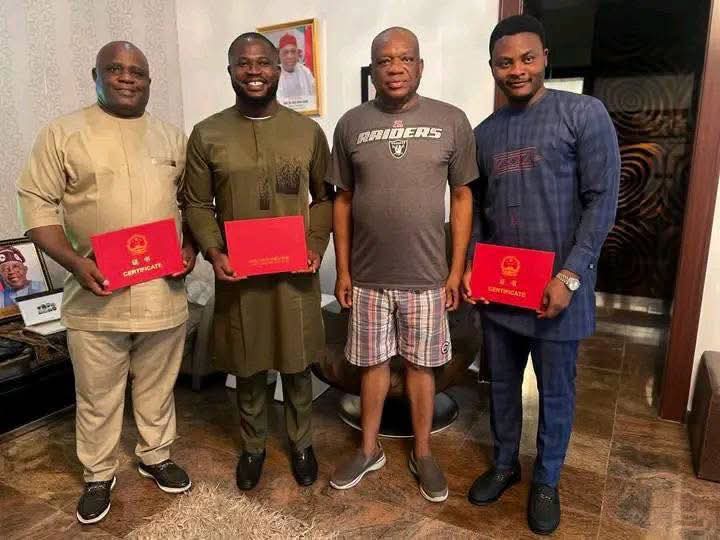
But there is another, arguably more enduring, measure of effective representation—the number of people whose lives are transformed and whose futures are fundamentally altered by the opportunities created through political leadership.
This is where Senator Orji Uzor Kalu’s representation of Abia North presents a compelling argument.
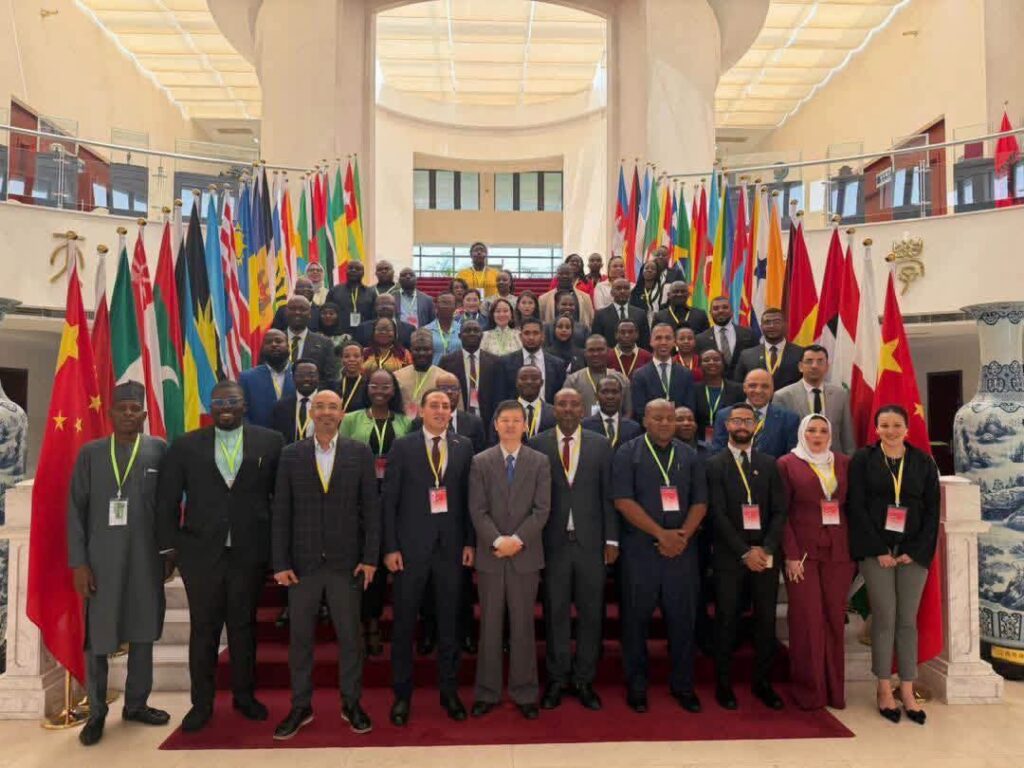
While physical infrastructure remains an essential component of constituency development, Kalu’s approach has increasingly highlighted a dimension of representation that deserves greater public attention: investment in human capital.
According to information from the Senator’s constituency interventions, more than 40 young people from Abia North have undergone overseas training in emerging fields including Artificial Intelligence, Robotics and Cybersecurity. Dozens more have reportedly benefited from scholarship opportunities to pursue advanced programmes abroad, including PhD, MBA, Medicine and Surgery, among other disciplines.
These are not merely educational statistics.
They represent young Nigerians being exposed to knowledge, technology and professional standards beyond the immediate limitations of their environment. They represent opportunities to acquire skills that can translate into jobs, businesses, innovations and, ultimately, community development.
And that is the point many political commentators sometimes miss.
The best constituency project may be a transformed human being
A road can connect two communities. A bridge can shorten a journey. A school building can provide a conducive environment for learning.
But an educated and empowered young person can potentially build a company, employ hundreds of people, develop new technology, save lives, conduct groundbreaking research or inspire an entire generation.
That is why human-capital development should not be treated as an afterthought in political representation.
For Abia North, sending young people into the global knowledge economy is particularly significant at a time when the world is rapidly moving towards artificial intelligence, automation, robotics, cybersecurity and other technology-driven sectors.
The question political leaders should be asking is not merely: “What can I build?”
It should also be: “Who will build the future when I am gone?”
Kalu’s investment in education and international exposure suggests an appreciation of this bigger question.
From constituency representation to generational investment
There is a temptation in Nigerian politics to measure performance by the number of projects commissioned, because physical projects are easy to photograph and publicise.
Human-capital development is different.
The impact of a scholarship may not become visible immediately. The young person studying Medicine today may become a specialist tomorrow. The beneficiary undergoing cybersecurity training may establish a technology firm years from now. The young researcher pursuing a PhD may eventually contribute to solving problems affecting Abia North and Nigeria.
In other words, human-capital projects have a multiplier effect.
One scholarship can potentially produce a professional who subsequently trains hundreds of others. One technology programme can produce an entrepreneur who creates employment. One international exposure opportunity can change the trajectory of an entire family.
That is the kind of investment whose returns cannot always be captured in a commissioning ceremony.
Why Kalu’s model deserves recognition
Senator Kalu’s supporters have a strong basis for arguing that his representation should not be assessed exclusively through the traditional lens of physical infrastructure.
The stronger argument is that infrastructure and human capital should complement each other.
A modern road is useful. But who will drive the industries along that road?
A new school building is valuable. But who will populate it with highly skilled teachers, researchers and innovators?
A health facility is important. But where will the doctors, surgeons, nurses and other professionals come from?
The answer is simple: people.
This is why the reported scholarships and overseas training programmes deserve to be placed within the broader conversation about what effective representation should mean.
Abia North does not merely need infrastructure for today. It needs a generation equipped to compete for tomorrow.
The real dividend of representation
There is also a political lesson here.
Representation should ultimately be about expanding possibilities for constituents.
A senator cannot personally employ every young person in a senatorial district. But strategic investment in education, skills acquisition and professional development can give young people the tools with which they can create opportunities for themselves and others.
That is a more sustainable model of empowerment than perpetual dependence on political patronage.
The young Abia North indigene who acquires advanced knowledge in Artificial Intelligence, Robotics or Cybersecurity is not merely a beneficiary of government intervention. He or she becomes a potential contributor to the future economy of the region.
The medical student who receives a scholarship today could become tomorrow’s specialist serving communities that desperately need quality healthcare.
The PhD scholar could return as a university lecturer, researcher or policy expert.
The MBA graduate could become an entrepreneur and employer of labour.
That is the deeper meaning of human-capital development.
Abia North must invest in its people
As the debate over political performance intensifies ahead of future elections, Abia North deserves a conversation that goes beyond partisan slogans.
The relevant question should be: What kind of future are we building for the next generation?
If the answer includes roads, bridges, schools, healthcare facilities and other physical infrastructure, that is good.
But if the answer also includes educated young people, internationally trained professionals, entrepreneurs, researchers and technology experts, then the development agenda becomes much more compelling.
This is where Senator Orji Uzor Kalu’s human-capital interventions provide an important dimension to the assessment of his representation.
The enduring legacy of a political leader is not only the structures he leaves behind. It is also the people he helps to build.
Concrete eventually ages. Buildings eventually require renovation. Roads eventually need reconstruction. But knowledge, skills and character can continue to generate value across generations.
That is why the investment in the people of Abia North deserves to be recognised as more than another constituency intervention.
It is an investment in the district’s future.
And perhaps that is the most powerful argument for the Kalu approach:
Don’t just build for Abia North. Build the people who will build Abia North.
The future of Abia North is its people. And any representation that invests deliberately in those people is investing in a future that can outlive any political office holder.