



Tinubu’s Reforms Boost Oil Production, Restore Investor Confidence – Lokpobiri
Nigeria’s petroleum sector has continued to record increased production, renewed investment and stronger drilling activity, as reforms undertaken by the administration of President Bola Ahmed Tinubu continue to reshape the industry, Minister of State for Petroleum Resources (Oil), Sen. Heineken Lokpobiri, Ph.D., has said.
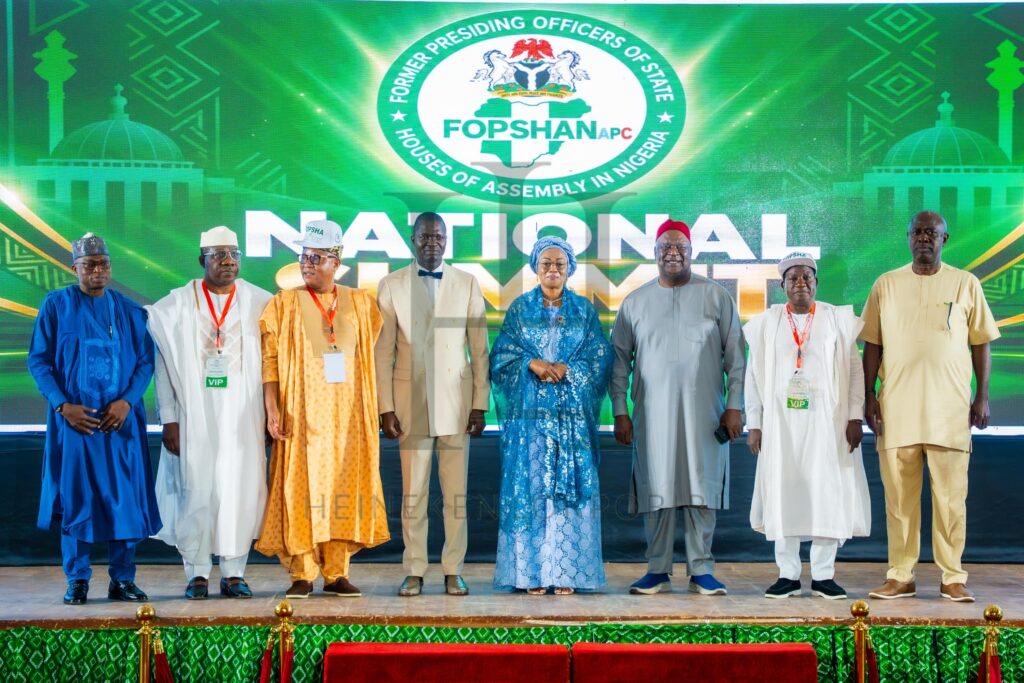
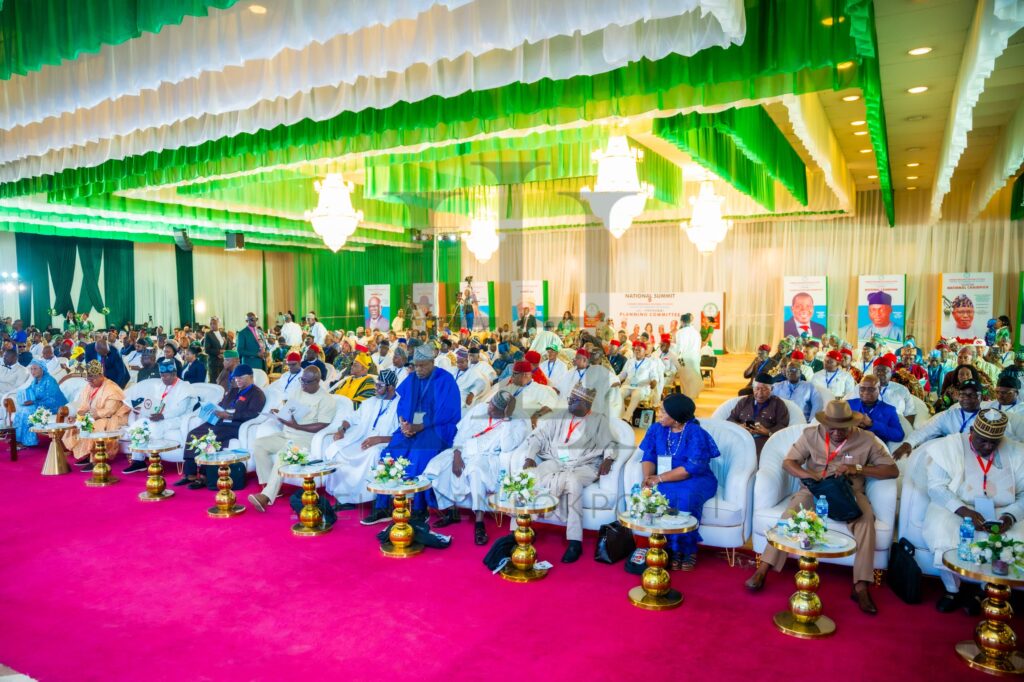
Lokpobiri stated this in his goodwill message at the National Summit of the Former Presiding Officers of State Houses of Assembly in Nigeria (FOPSHAN), themed “Bold Leadership, Bold Reforms: From Subsidy to Renewed Hope — Assessing the Economic Trajectory and Visionary Leadership of President Bola Ahmed Tinubu’s Administration.”
The Minister said an assessment of the administration’s record in the petroleum sector must begin with the state of the industry it inherited in May 2023: declining investment, production of about one million barrels per day, stalled asset transactions and limited drilling activity.
“An assessment of the achievements of the Renewed Hope Administration must start from where we were as a nation before May 2023 and where we are today, particularly in terms of production capacity,” Lokpobiri said.
He noted that production has since recovered substantially, with the country recording production levels approaching 1.8 million barrels per day and daily production reaching above that level at different points in 2026.
According to the Minister, the recovery reflects deliberate interventions by the President and sustained implementation across the petroleum sector, including the resolution of long-standing industry issues, improved security, greater regulatory certainty and measures designed to attract capital back into upstream operations.
One of the clearest indicators, he said, is the increase in active drilling rigs from about 14 in 2023 to more than 60, representing a significant expansion in exploration and production activity.
“A rig is not merely a number. It is capital deployed, wells being drilled, Nigerian contractors working, services being provided and ultimately new production. The rig today means production tomorrow,” Lokpobiri said.
He also highlighted the return of major Final Investment Decisions to Nigeria. Since 2023, the country has secured more than $8 billion in major upstream FIDs, including the $5 billion Bonga North project, the $550 million Ubeta project and the $2 billion Shell HI project, with additional investments under consideration.
The Minister said the significance of these investments goes beyond their immediate monetary value because major upstream developments have multi-year development cycles and will contribute additional production, government revenues, jobs, contracts and infrastructure over the coming years.
“An FID taken today will deliver barrels tomorrow and several years from now. Infrastructure constructed today will support production for decades. What the President has done is not only address the challenges of today; he is rebuilding the productive capacity of the industry for tomorrow,” he said.
Lokpobiri also pointed to the President’s intervention in previously stalled divestment transactions involving major international oil companies, saying their conclusion removed uncertainty around important assets and enabled a new generation of Nigerian operators to deploy capital and increase production.
He noted that indigenous companies now account for a significant share of national production, reflecting the expanding role of Nigerian operators in the upstream industry.
On petrol subsidy removal, Lokpobiri said the President took a difficult fiscal decision against the background of a subsidy regime that had cost the country more than ₦4 trillion in 2022 alone, with expenditure at its height estimated at about ₦18.4 billion daily.
He said deregulation had subsequently altered the commercial structure of the downstream petroleum sector, creating greater room for competition, private investment and domestic refining.
The Minister identified the emergence of large-scale domestic refining as an important structural change, noting that the 650,000-barrel-per-day Dangote Refinery, alongside other domestic refining capacity, is strengthening Nigeria’s ability to process its crude locally rather than depend predominantly on imported petroleum products.
He further noted that Nigeria is increasingly connecting domestic crude production to domestic refining. In the second quarter of 2026, 53.7 million barrels of crude oil and condensate were supplied to local refiners, with Domestic Crude Supply Obligation performance reaching 97.4 per cent.
According to Lokpobiri, the combination of higher production, increased drilling, major investment decisions, indigenous participation and expanding domestic refining capacity demonstrates the structural changes taking place across the petroleum value chain.
“The story of this administration in the petroleum sector is not just about what we have achieved today. It is about the productive capacity we are building for tomorrow,” he said.
“We have a President who understands that capital goes where it is welcomed. Our responsibility at the Ministry is to translate his policy direction into an environment where investors can come, where existing operators can expand, where Nigerian companies can grow and, most importantly, where those investments translate into production and economic value for the Nigerian people.”
A release by Nneamaka Okafor,
Special Adviser, Media and Communications
to the Honourable Minister of State for Petroleum Resources (Oil), says, Lokpobiri urged members of FOPSHAN to engage citizens with the measurable outcomes of the reforms and the longer-term significance of investments now being made in the sector.
“Some of the projects being developed today will deliver in 2027, others in 2029 and beyond. That is the normal development cycle of major oil assets. The rig today means production tomorrow. The FID today means barrels tomorrow. The infrastructure we build today will serve Nigeria for decades.”
He added that the administration’s objective remains to sustain production growth, deepen investment, expand domestic refining and ensure that Nigeria derives greater economic value from its petroleum resources for both present and future generations.