


What Macron Chose to Do in Nairobi and What We Should Learn from It
By Osita Chidoka
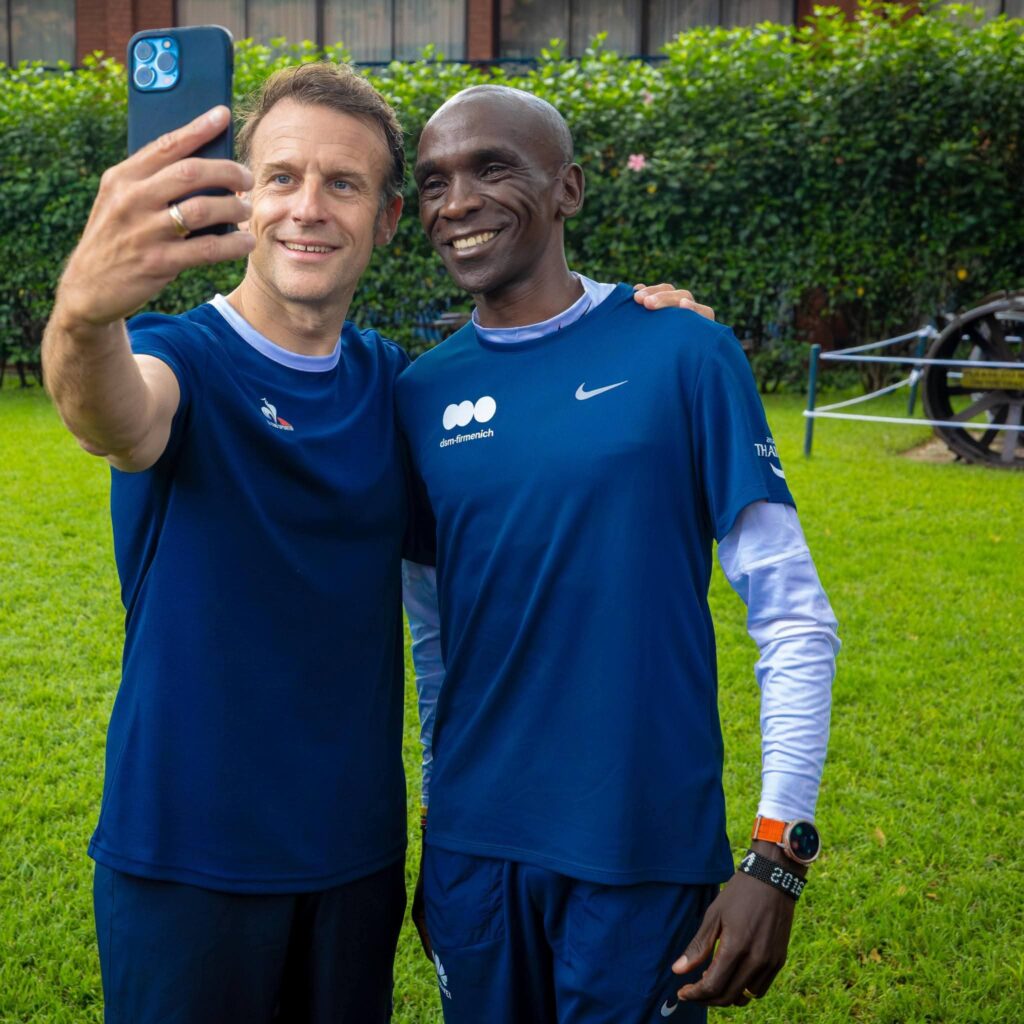
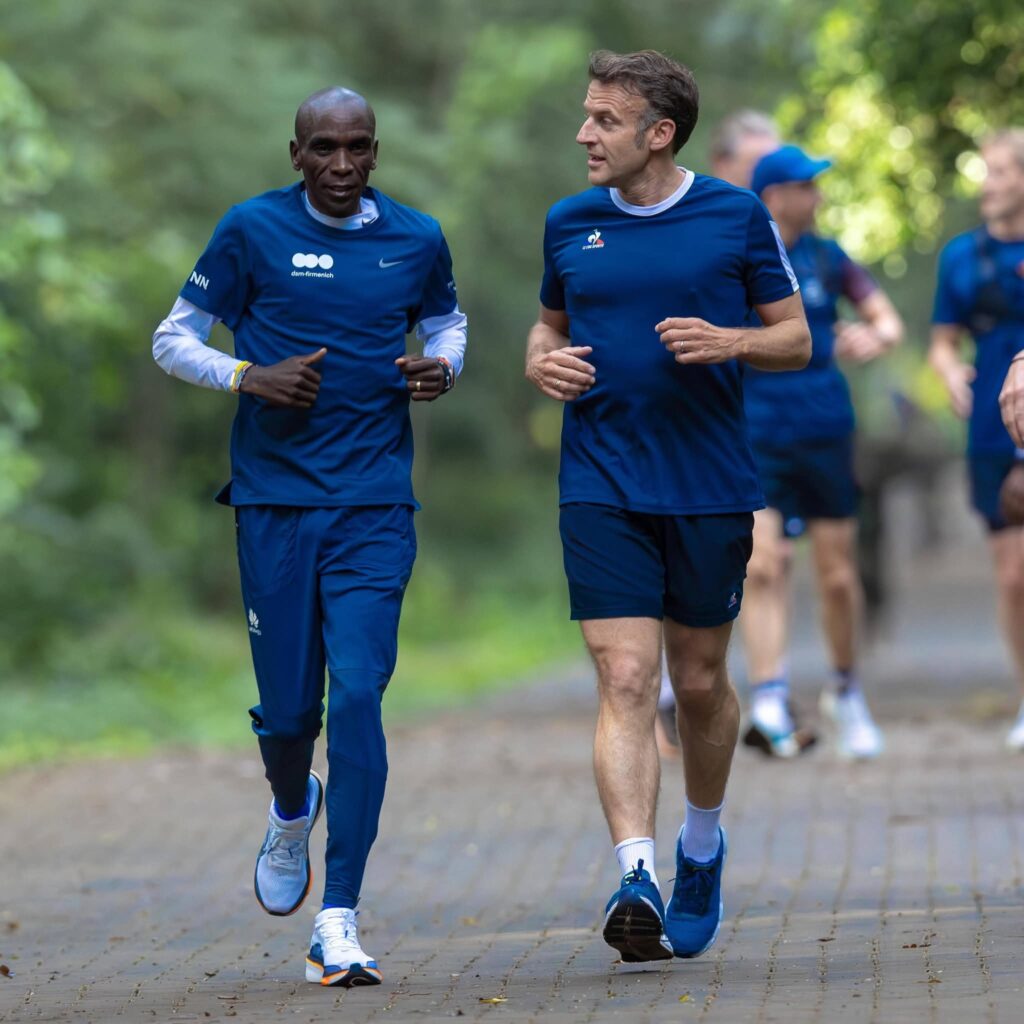
When Emmanuel Macron landed in Kenya, he did not reach first for a summit table or a billionaire’s boardroom. He put on his running shoes and jogged through the streets of Nairobi with Eliud Kipchoge.
That single choice is worth more than a thousand communiqués.
Like Sir Roger Bannister, who broke the sub-four-minute mile in 1954, Kipchoge, the first man to run a sub-two-hour marathon, even if not as an official record, and Sebastian Sawe, whose London record followed in that tradition, will forever be remembered for setting new boundaries that proved the infinite nature of human possibility. Long after today’s leaders are forgotten.
Most African leaders, when they travel, compete to be photographed with the powerful. Macron, a sitting President of France, chose to be seen with the excellent. Not a strongman or a tycoon, but a marathoner. A man who became a global icon through discipline, humility, and relentless self-mastery.
That is not a small thing. What a leader chooses to honour tells you everything about what that society will eventually become.
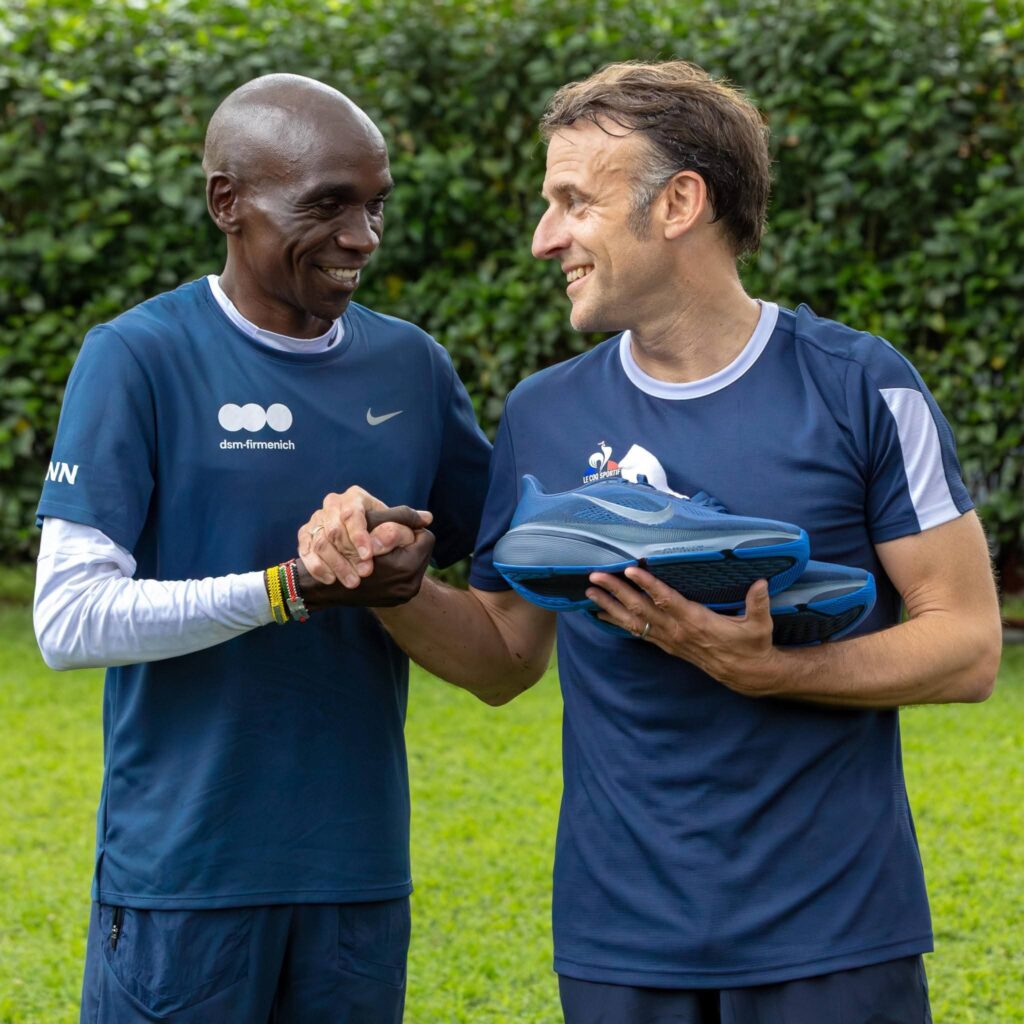
The photographs also say something about Nairobi. A foreign Head of State jogged openly through its streets. That means the city is safe enough, organised enough, and human enough for that morning to happen.
Civilisation is not measured only by airports and towers. It is measured by whether ordinary people can walk, jog, and breathe freely in their cities. Sidewalks, public spaces, parks and livability matter.
I am a runner. I know the commitment, dedication and discipline required to maintain a running habit while in public office. I know what a shared morning run does in building a community of shared interest.
During the run, titles, positions and artificially constructed social standing fall away. What remains is just two people, breathing hard, moving forward, to the rhythm of their footfalls. At that moment, like on our deathbed, all paraphernalia dissolve and our common humanity becomes the tie that binds.
That is the Africa we must build. Cities designed for people. Leaders who celebrate competence over connection. Societies that practise the elitism of ability, not the elitism of access.
Kipchoge used that run to speak about the next generation of African athletes. Our leaders need to reconnect to the streets, feel the pulse of the people and share in both our aspirations and our anxieties.
This was not just a run. It was a civilisational signal. A signal Africa should take seriously.
Osita Chidoka
18 May 2026